Understanding the Soft Ground Challenge
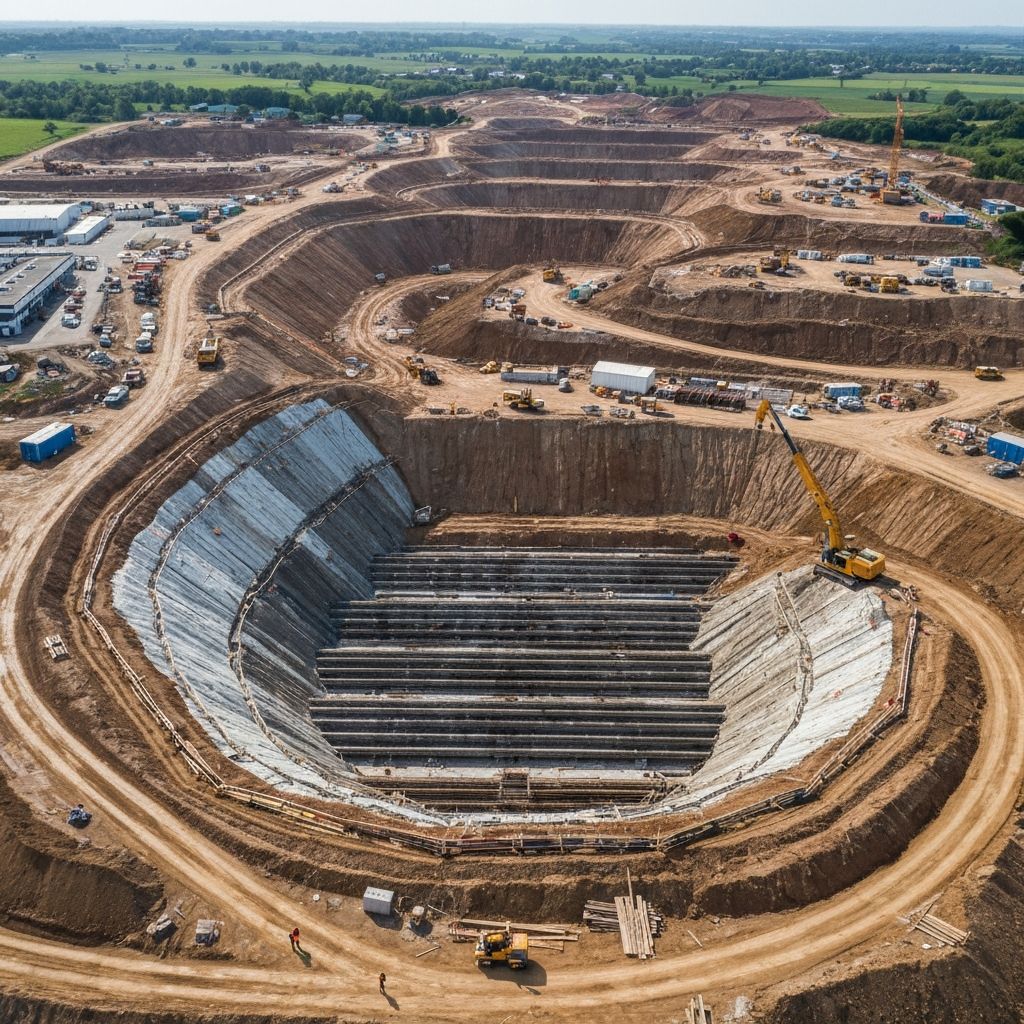
Soft soils are everywhere. Coastal plains, river deltas, reclaimed land—pick a region and you will find them. They are characterized by low shear strength, high compressibility, and poor drainage. Build anything on them untreated, and you are asking for trouble: differential settlement, bearing failure, prolonged consolidation, or worse.
The traditional fix used to be dig-and-replace, or deep piling. These work, sure. But they are expensive, slow, and not always practical, especially when the soft layer runs 20 or 30 meters deep. This is exactly where geosynthetics step in. They offer a modern alternative that is both cost-effective and technically sound.
The question is no longer whether to use geosynthetic materials for soft ground treatment—it is how to combine them.
Market Context: Geosynthetics in Numbers
The global geosynthetics market surpassed $20 billion in 2023, with projections indicating sustained growth at a compound annual rate of around 7.2% through 2030. Within this broader category, the geogrid segment alone was valued at approximately $1.52 billion in 2025, expected to reach $1.88 billion by 2030.
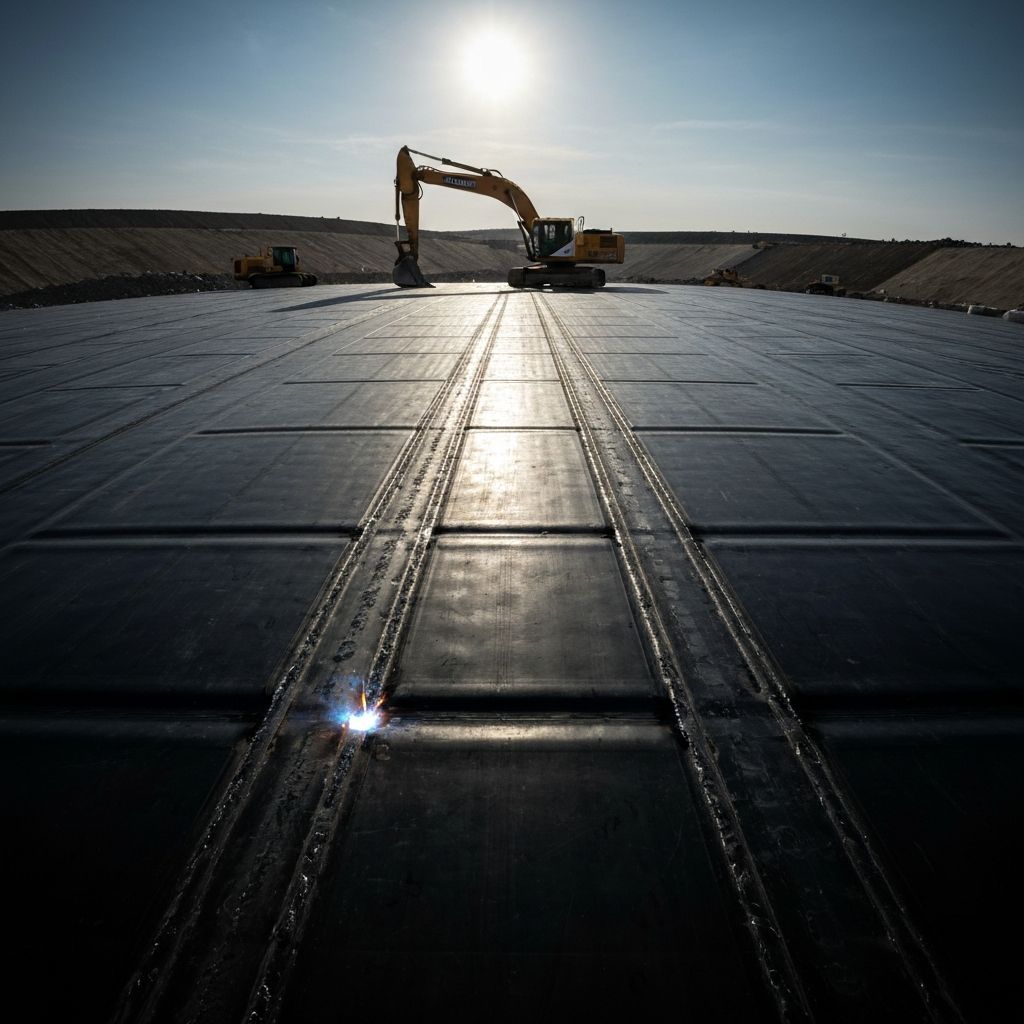
Why the sustained growth? Three drivers: transportation infrastructure (roads, railways, airports in soft-soil regions), environmental regulation (landfill lining, contaminated site containment), and water conservancy (flood defense, canal lining).
Geogrid Reinforcement: Mechanics and Measurable Gains
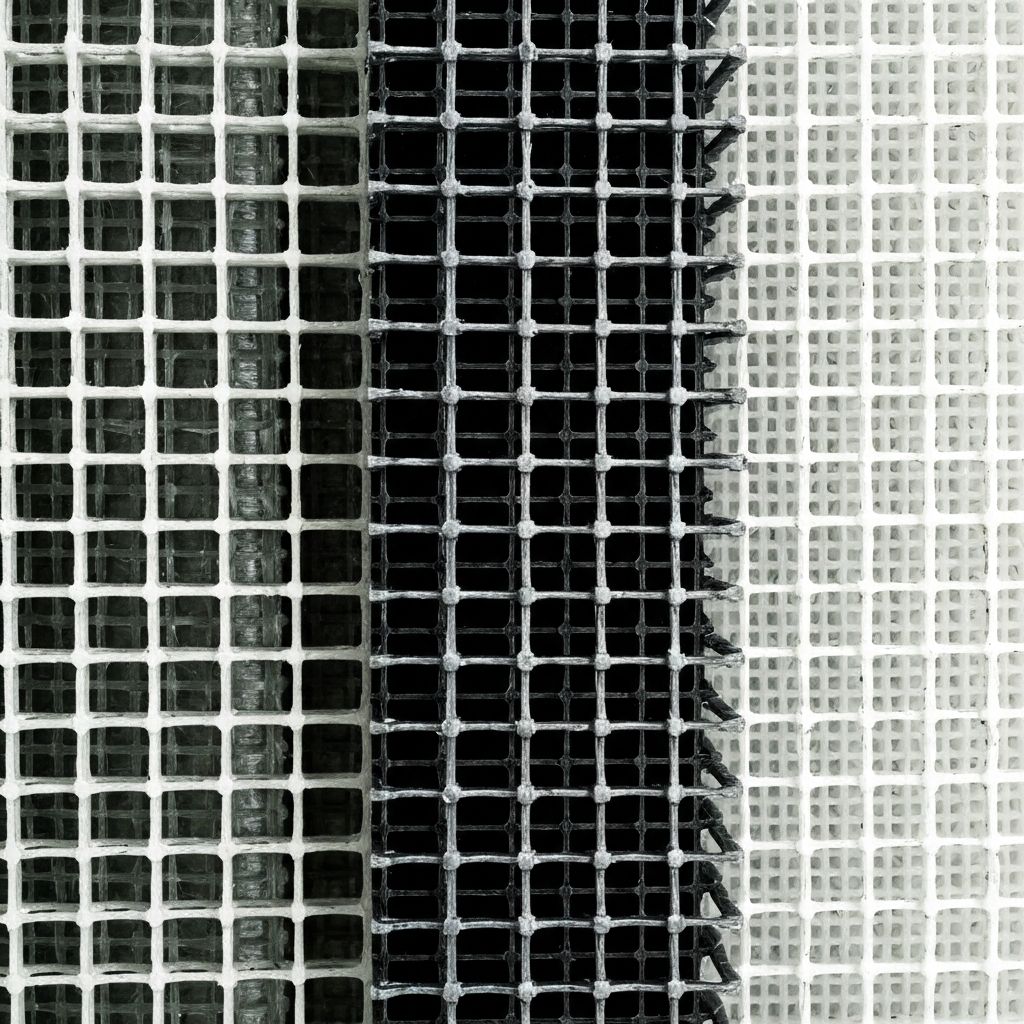
A geogrid for soft ground stabilization is fundamentally different from a geotextile. It is an open-aperture grid structure—usually punched-and-drawn polypropylene or woven high-tenacity polyester—designed to interlock with granular material. This interlock is the key. The aggregate particles strike through the apertures and lock together, creating a mechanically stabilized layer that resists lateral movement and redistributes vertical stress.
The performance numbers are striking. Controlled laboratory and field studies consistently show substantial improvements in bearing capacity and settlement control when geogrids are deployed over soft subgrades.
One experimental investigation using triaxial geogrids on soft clay subgrades achieved an ultimate bearing capacity of 1,040 kPa for a 0.20m reinforced base, compared to 720 kPa for an otherwise identical unreinforced section—a 44% improvement. Settlement reductions exceeded 59% with triaxial geogrid reinforcement.
- Geogrid reinforcement can increase subgrade CBR by 200–500%
- Reduce granular base thickness by 30–50%
- Cut overall project costs by 15–25%
Geotextile Separation: Prevention at the Interface
When you place a clean, angular granular fill directly on a soft, fine-grained subgrade, something predictable happens under traffic or construction loading. The fine subgrade particles migrate upward into the granular layer; the aggregate punches downward into the subgrade. The two layers intermix. Contamination occurs.
This is separation failure. And it is one of the most underappreciated failure mechanisms in soft-ground construction.
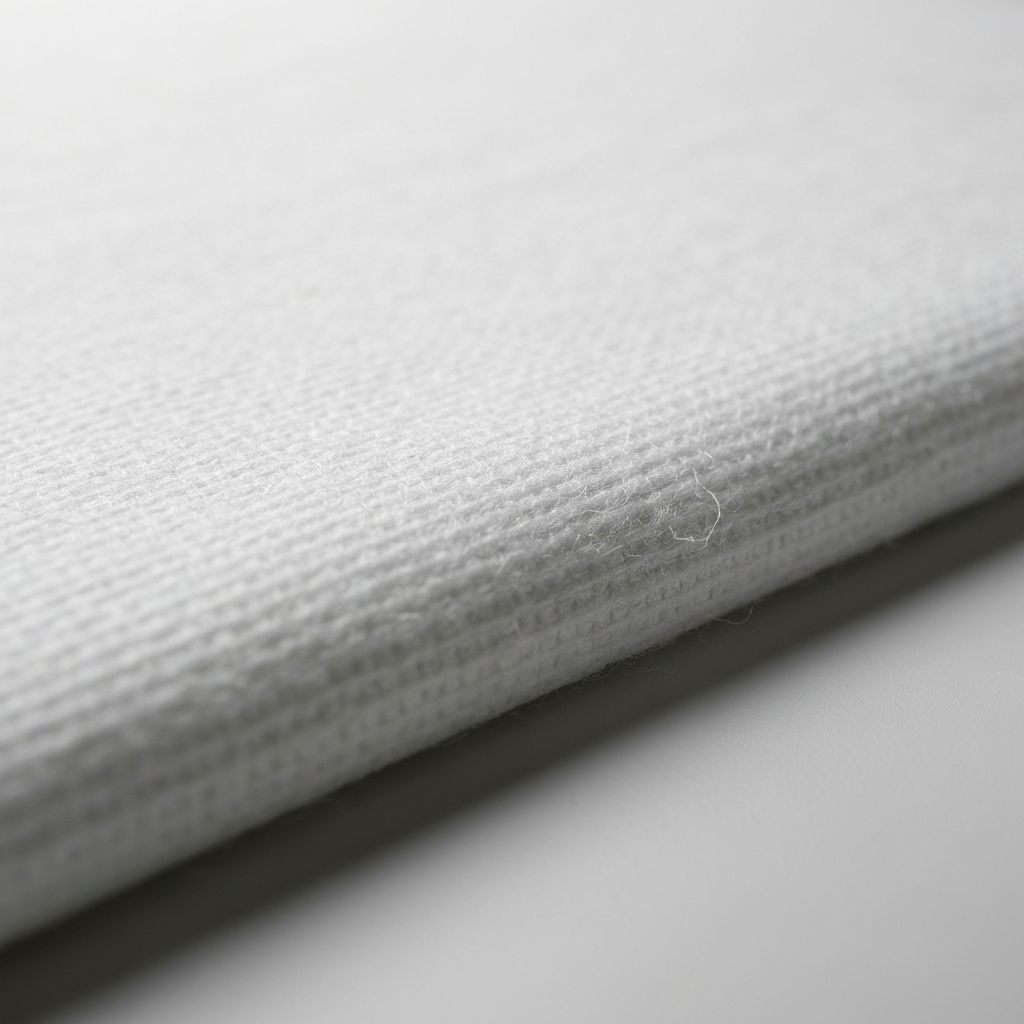
A properly specified geotextile for soft soil isolation—typically a nonwoven needle-punched fabric—acts as a permeable barrier at the subgrade–base interface. It allows water to pass through (preserving drainage) while preventing particle migration in either direction.
In accelerated pavement testing, a nonwoven geotextile separator at the subgrade–base interface delivered a Traffic Benefit Ratio (TBR) of up to 6.4 at 25.4mm rutting depth. The TBR represents the ratio of traffic passes to reach a given rut depth with the geotextile versus without it—a TBR of 6.4 means the pavement lasted more than six times longer.
Drainage: Prefabricated Vertical Drains and How They Work
Soft, saturated clays consolidate slowly. Excess pore water pressure dissipates gradually because the soil permeability is low. If you apply fill or structural load before dissipation is adequate, you risk bearing failure or excessive post-construction settlement.
Prefabricated vertical drains (PVDs)—sometimes called wick drains or strip drains—short-circuit this bottleneck. A PVD consists of a high-permeability polymeric core wrapped in a geotextile filter jacket. Installed vertically at regular spacing into the soft soil, the drains provide short, horizontal drainage paths that radically reduce consolidation time.
In a small-scale laboratory study simulating field conditions, models with PVDs consolidated 5.3 times faster than those without, with 7.15 times greater water discharge. Construction experience shows that with PVDs and surcharge, the consolidation period can shrink from 13.5 months to 6 months.
The Combined System: Integration, Not Addition
Each of the three elements discussed above solves one part of the soft-ground problem. Reinforcement increases bearing capacity and controls differential settlement. Separation preserves the integrity of the granular layer. Drainage accelerates consolidation and reduces long-term settlement.
But use them in isolation, and you risk undermining the performance of the others. A geogrid-reinforced platform on soft, saturated clay without drainage may experience acceptable short-term bearing capacity but still suffer prolonged post-construction settlement.
The systems approach integrates all three functions. A representative combined system for a road embankment on soft ground might look like this:
- PVDs installed vertically through the soft layer to accelerate consolidation during construction surcharge
- A basal geogrid layer placed over the prepared subgrade to provide tensile reinforcement and load distribution
- A nonwoven geotextile separator between the subgrade and the granular fill to prevent intermixing and provide lateral drainage
Sourcing from a Qualified Geosynthetic Materials Manufacturer
The success of any soft-ground treatment system depends heavily on material quality. A competent manufacturer will provide:
- Full technical data sheets including tensile properties (ASTM D6637 for geogrids, ASTM D4595 for geotextiles), puncture resistance (ASTM D6241), and apparent opening size
- Third-party testing certifications and compliance documentation (ISO 9001, CE marking, GRI specifications)
- Long-term durability data: UV resistance, chemical resistance, and creep reduction factors derived from 10,000-hour testing
- Project-specific design support and installation guidance
- Traceable supply chain documentation and consistent product quality batch-to-batch
Conclusion
Soft ground engineering is not a single-problem discipline. It demands solutions that address bearing capacity, settlement, and drainage simultaneously. Geosynthetics—used systematically—provide such solutions.
The evidence base is strong. Geogrid reinforcement can increase bearing capacity by 40–75% and reduce settlement by more than 50%. Geotextile separators can extend pavement life by a factor of six or more. Prefabricated vertical drains can accelerate consolidation by five times or shrink a consolidation schedule from over a year to six months.
When combined—geogrid at the base, geotextile at the interface, PVDs through the depth—these technologies form an integrated system that outperforms any single element in isolation.