When the Ground Demands Reinforcement
Soil does not stay where you put it. Embankments settle, subgrades rut, retaining walls lean, and asphalt pavements crack—all because the ground beneath them moves, shifts, and deforms under load. A geogrid buried in the right layer, at the right depth, with the right material properties, transforms that unstable soil mass into a mechanically stabilized composite that resists tensile stress, redistributes load, and holds geometry over decades of service.
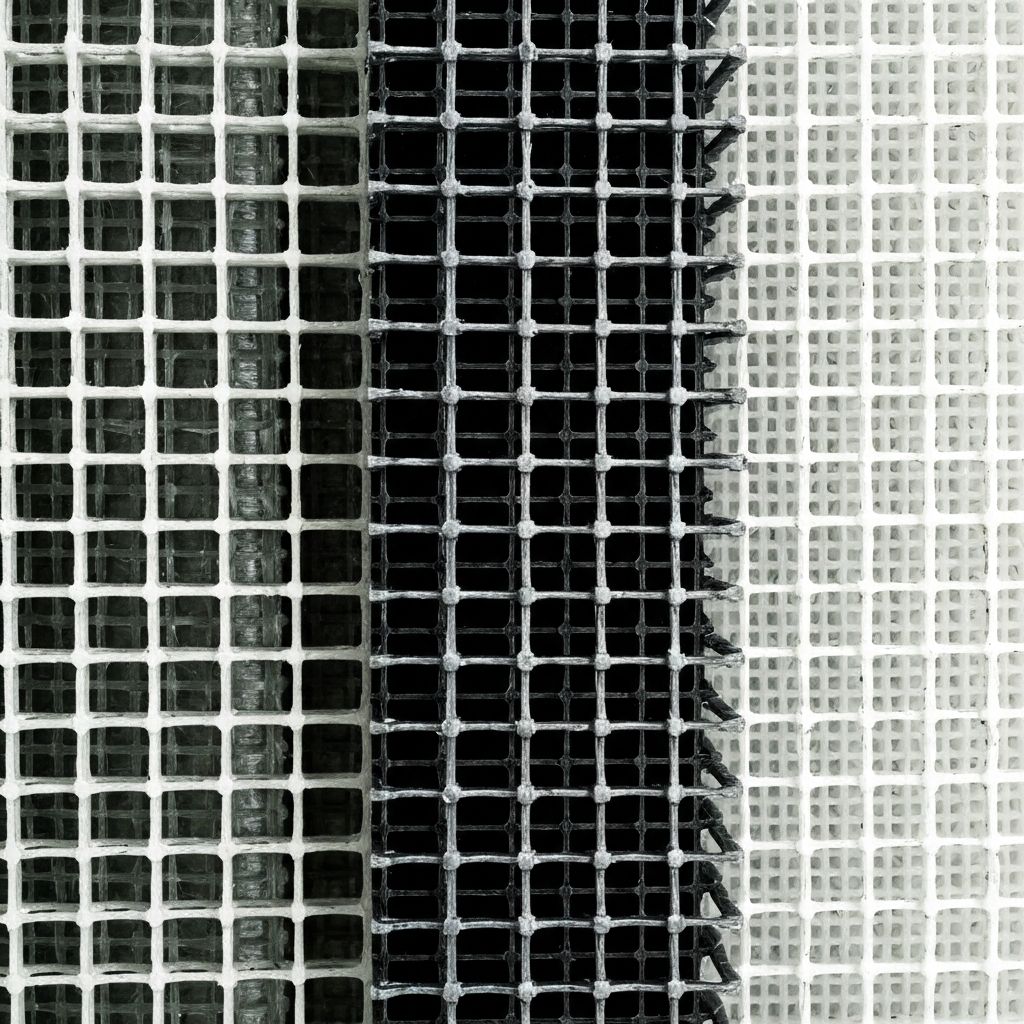
But geogrid is not one product. It is a family of materials engineered from fundamentally different raw inputs—glass fiber, high-tensile steel wire encased in polymer, and high-tenacity polyester yarn—each with distinct mechanical behavior, environmental resistance, and cost profile.
Market Scale and the Material Decision Behind It
The global geogrid market was valued at approximately USD 1.57 billion in 2025 and is projected to reach USD 3.08 billion by 2032, growing at a CAGR of 10.08%. The broader geosynthetics market—encompassing geotextiles, geomembranes, geogrids, and geocomposites—was valued at approximately USD 175.5 billion in 2025 and is projected to reach USD 354.9 billion by 2033.
Fiberglass Geogrid: High Modulus, Low Elongation, Zero Creep
Fiberglass geogrid is manufactured from alkali-free glass fibers woven into an open grid structure and coated with a bitumen or polymer protective layer. The material's defining characteristic is its combination of exceptionally high elastic modulus with near-zero creep and elongation at break typically below 3–4%.
Standard fiberglass grids achieve tensile strengths ≥80 kN/m in both longitudinal and transverse directions, with elongation at break controlled to ≤3%. The critical performance parameter is not ultimate tensile strength but stiffness—the load required to produce a given strain.
Glass fiber does not creep. Under sustained load, fiberglass geogrid exhibits effectively zero long-term deformation. This distinguishes it from all polymer-based geogrids.
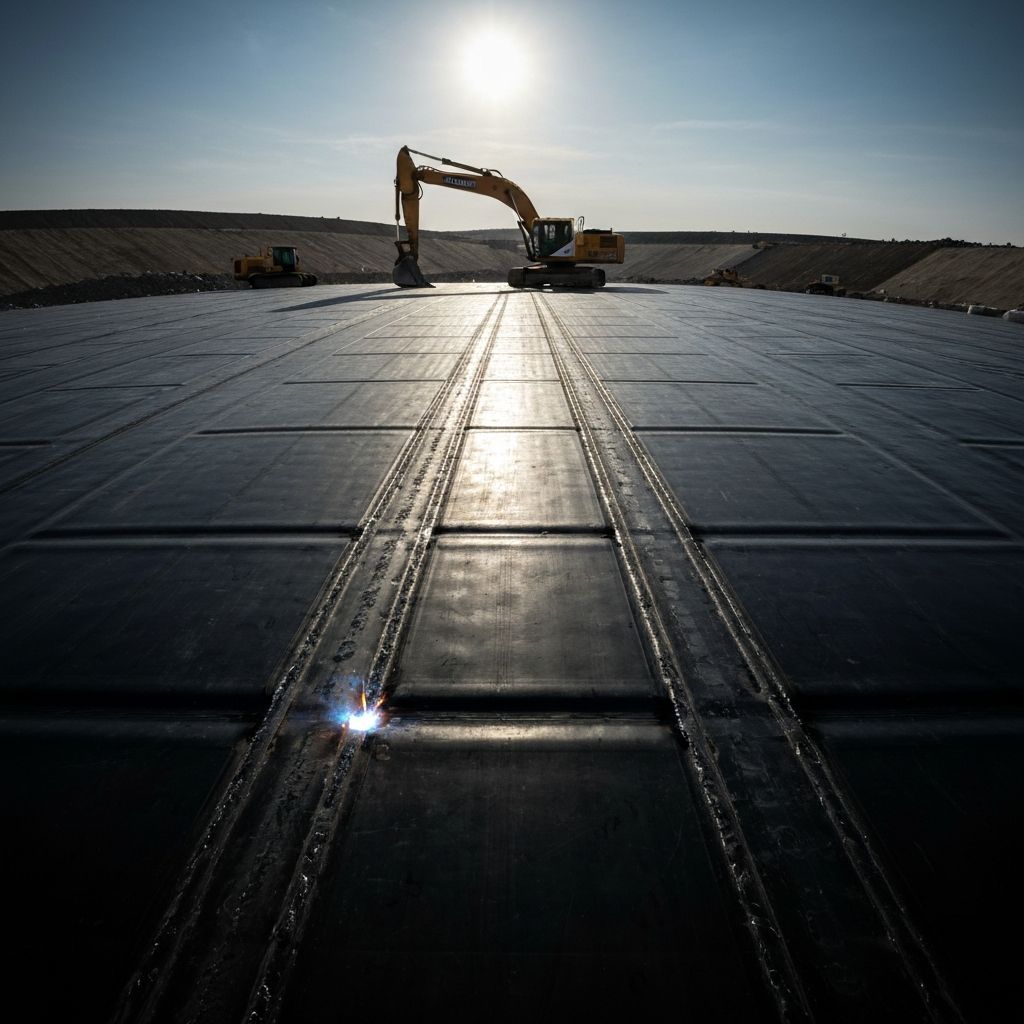
Primary application profile: Asphalt pavement reinforcement, reflective cracking prevention in pavement overlays, airport runway rehabilitation, bridge deck waterproofing interlayers, and cement concrete pavement reinforcement.
Steel-Plastic Composite Geogrid: Where Tensile Strength Peaks
Steel-plastic composite geogrid consists of high-strength steel wires (or steel wire strands) arranged in a warp-weft configuration, encased within a polyethylene or polypropylene sheath formed by extrusion. The steel core carries tensile load; the polymer sheath provides corrosion protection, chemical isolation, and a textured surface for soil interlock.
Steel-plastic geogrid achieves the highest absolute tensile strengths among commercially available geogrid categories. Published technical specifications document longitudinal and transverse tensile strengths from 50 kN/m to over 150 kN/m, with some references indicating capabilities exceeding 200 kN/m. Elongation at break is tightly controlled at ≤3%.
Primary application profile: Soft foundation treatment, deep subgrade stabilization, high MSE retaining walls (heights exceeding 10 meters), mining haul roads, embankment reinforcement over weak soils, bridge approach slab support, and heavy-load industrial pavements.
Polyester (PET) Geogrid: The Creep-Resistant Workhorse
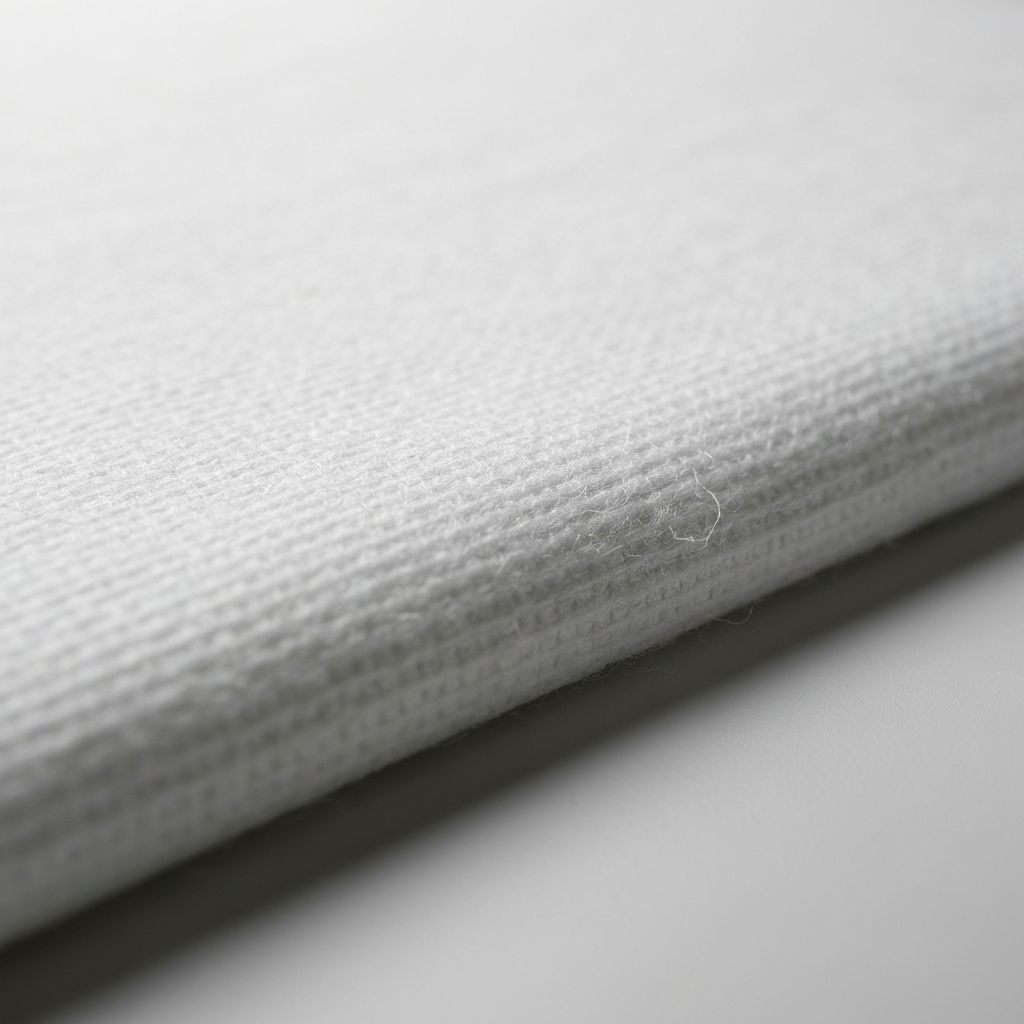
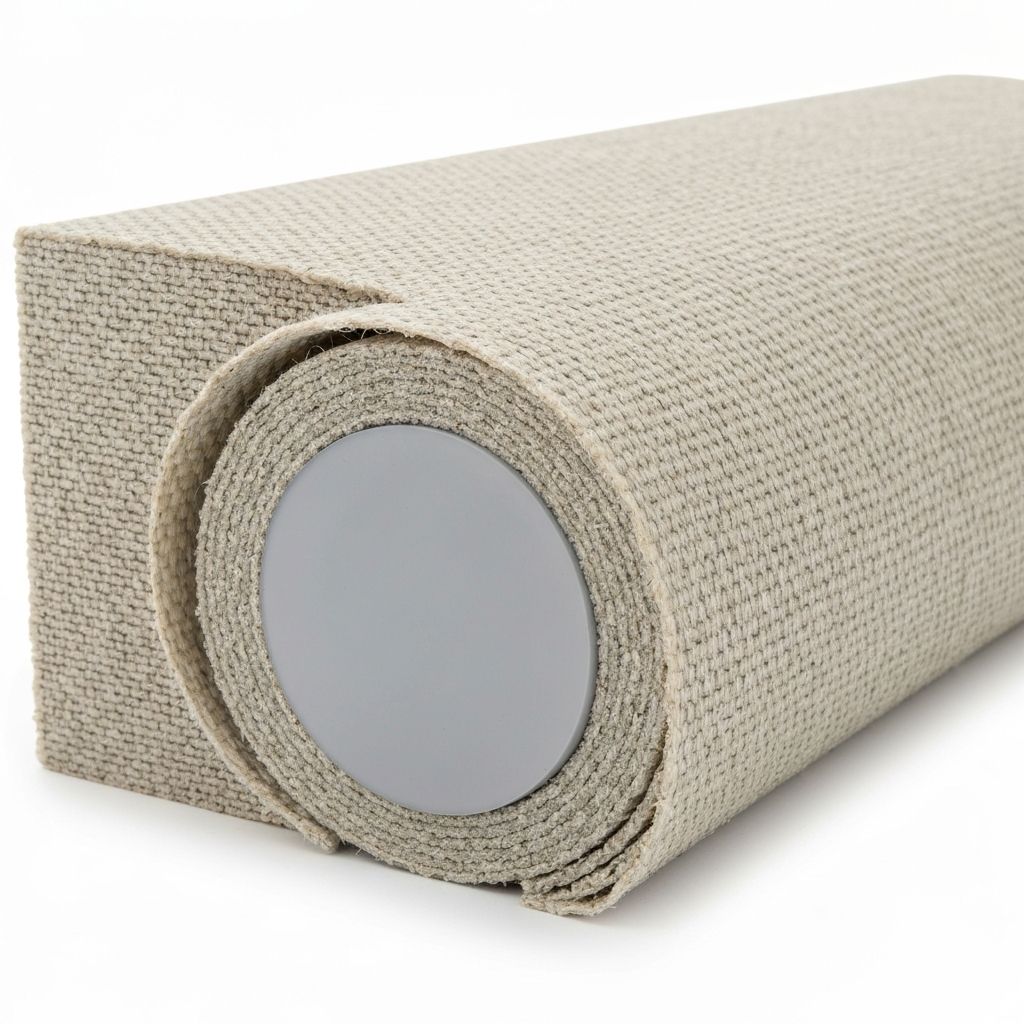
Polyester geogrid—also termed PET geogrid or warp-knitted polyester geogrid—is manufactured from high-tenacity polyester yarn with molecular weight typically exceeding 25,000, woven or knitted into an open grid structure, and coated with PVC, acrylic, or polymeric protective layer.
Polyester geogrid provides a wide tensile strength range spanning from 20 kN/m to over 1,000 kN/m for uniaxial configurations and from 20 kN/m to 300 kN/m for biaxial versions. High-tenacity PET geogrids are specified to exhibit creep deformation not exceeding 1.38% under 70% of ultimate tensile strength load over a 100-year design life.
Polyester geogrid offers an exceptionally wide service temperature range from -70°C to +180°C, excellent UV resistance, and strong resistance to microbial degradation.
Head-to-Head Performance Comparison
| Performance Parameter | Fiberglass Geogrid | Steel-Plastic Composite | Polyester (PET) Geogrid |
|---|
| Base Material | Alkali-free glass fiber + coating | High-strength steel wire + PE/PP sheath | High-tenacity PET yarn + coating |
| Tensile Strength (kN/m) | ≥80 (biaxial) | 50–200+ (biaxial) | 20–1,200 (uniaxial); 20–300 (biaxial) |
| Elongation at Break (%) | ≤3–4 | ≤3 | ≤5–8 |
| Creep Behavior | Zero creep | Very low (steel controlled) | ≤1.38% strain over 100 years at 70% UTS |
| Temperature Range | >180°C short-term | Moderate: ~70–80°C continuous | Wide: -70°C to +180°C |
| Corrosion Resistance | Excellent (non-metallic) | Good (depends on coating integrity) | Excellent (inherent to PET) |
| Typical Design Life | 20–30 years (pavement) | 30–50 years (subgrade) | 50–100+ years (reinforced-earth) |
Selection Decision Framework: Matching Material to Application
Step 1: Define the primary reinforcement function. If the answer is asphalt—pavement overlay, road rehabilitation, bridge deck interlayer—fiberglass geogrid is almost certainly the correct technical choice.
Step 2: Determine the tensile demand and creep sensitivity. If the factored tensile demand exceeds approximately 150 kN/m, steel-plastic geogrid becomes the primary candidate. If the design life exceeds 50 years and creep deformation is the governing limit state, select polyester geogrid.
Step 3: Evaluate chemical exposure. In saline, acidic, or alkaline environments, PET geogrid's inherent chemical stability provides an advantage over steel-plastic grids.
Conclusion: The Material That Fits the Problem
The geogrid you select should be determined by the problem you need to solve—not by convenience, not by the materials already in your supply chain. Fiberglass for asphalt reinforcement where thermal stability and zero creep matter. Steel-plastic for ultra-high-strength applications where tensile demand exceeds what polymer grids can deliver. Polyester for long-design-life soil reinforcement where creep performance governs and chemical resistance is essential.