The Structure Your Geotechnical Supplier Wishes You Would Ask About
A project engineer in a quality review once laid out a drawing notation from a reservoir liner spec. Tension on the prepared subgrade was pulling the membrane layer tight over a sub-angular gravel lens, and one side of the composite–the side without any geotextile protection–surrendered. The installation had been ordered under the generic designation "geomembrane," no structural prefix and no weight class. The replacement run used a three-digit gram-per-square-meter suffix and a second layer of nonwoven on the underside. Leakage stopped the same week the new material was welded down.
This case, repeated in variations across hydraulic engineering, solid-waste containment, and buried waterproofing, focuses on one question: when is a single fabric face enough, and when does the job require a sandwich structure of nonwoven geotextile and impermeable core?
Market Context: Driving Material Volumes Higher
The global geosynthetics market was valued at approximately USD 14.18 billion in 2024 and is projected to reach USD 22.34 billion by 2032, growing at a compound annual growth rate of 5.85% during the forecast period. Within this broad category, composite geomembrane structures—particularly those built around HDPE and LLDPE film cores—account for a significant and rising share.
China alone contributes an estimated 45% of global composite geomembrane output, with domestic demand projected to reach RMB 20.25 billion in 2025. Major water-transfer programs, landfill expansion and closure, mining tailings compliance, and photovoltaic site preparation on saline or unstable ground are the persistent demand drivers.
Anatomy of Three Core Structures
One Fabric, One Membrane: The Lean Configuration
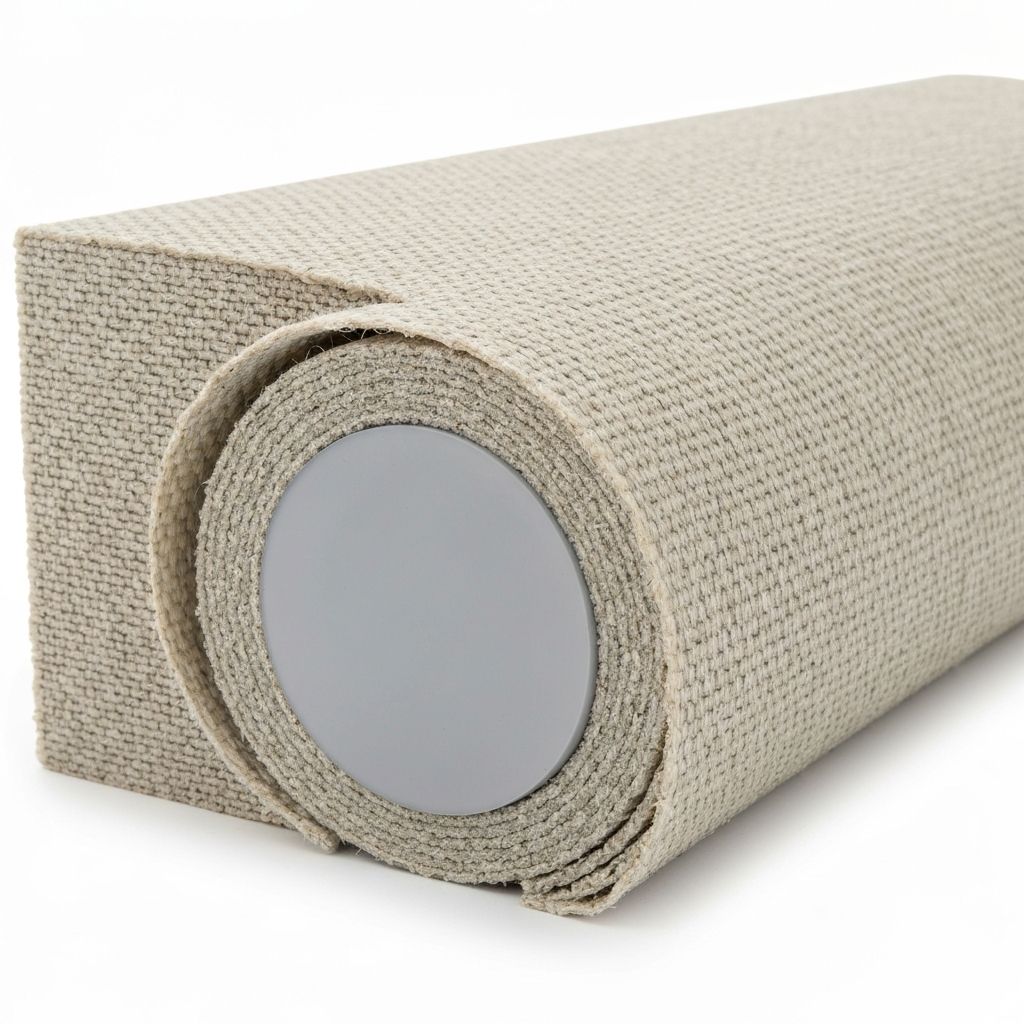
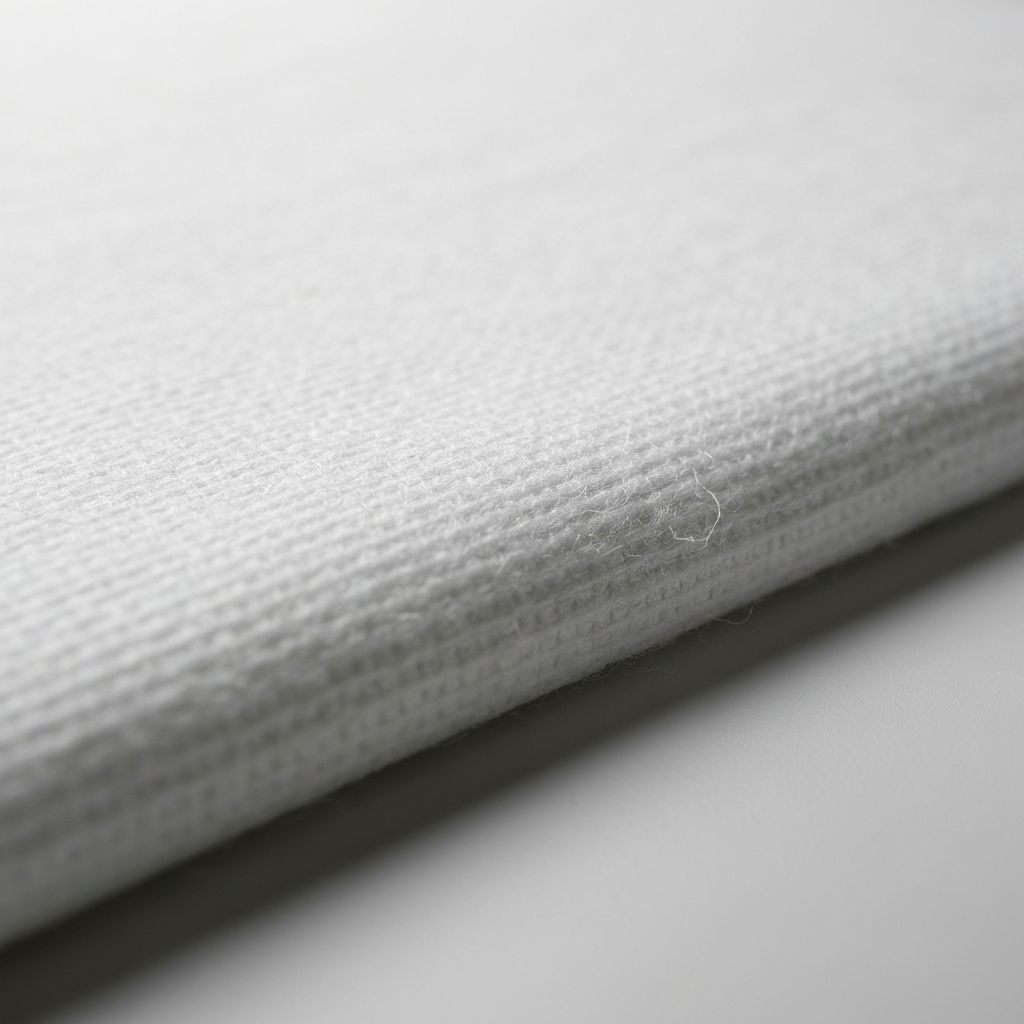
In a "one fabric one membrane" build-up, a single layer of needle-punched nonwoven geotextile is thermally or adhesively bonded to the top face of an impermeable polyethylene film, specified as low as 100 g/m² for the textile and 0.1mm for the membrane, and scaling up to 800 g/m² and 1.5mm respectively.
The geotextile provides friction against the overlying ballast or soil cover, drains pore water that accumulates at the liner interface, and protects the polyethylene layer from puncture during placement of the protective cover. The bare underside of the membrane sits directly on the prepared subgrade or geotechnical clay liner.
This configuration is specified where the foundation is well-prepared, free of angular particles, and unlikely to settle differentially. Typical deployments involve roadbed waterproofing, airfield apron drainage, roof-garden retention layers, and secondary containment in landscaped basins.
Two Fabrics, One Membrane: The Protected Core
"Two fabrics one membrane"—widely referenced as the sandwich structure—places the polyethylene film core between two layers of needle-punched nonwoven geotextile. Both outer faces are textile, providing protection from puncture in both directions: from above during cover-soil placement and from below when the subgrade is angular, rocky, or subject to pore-pressure fluctuations.
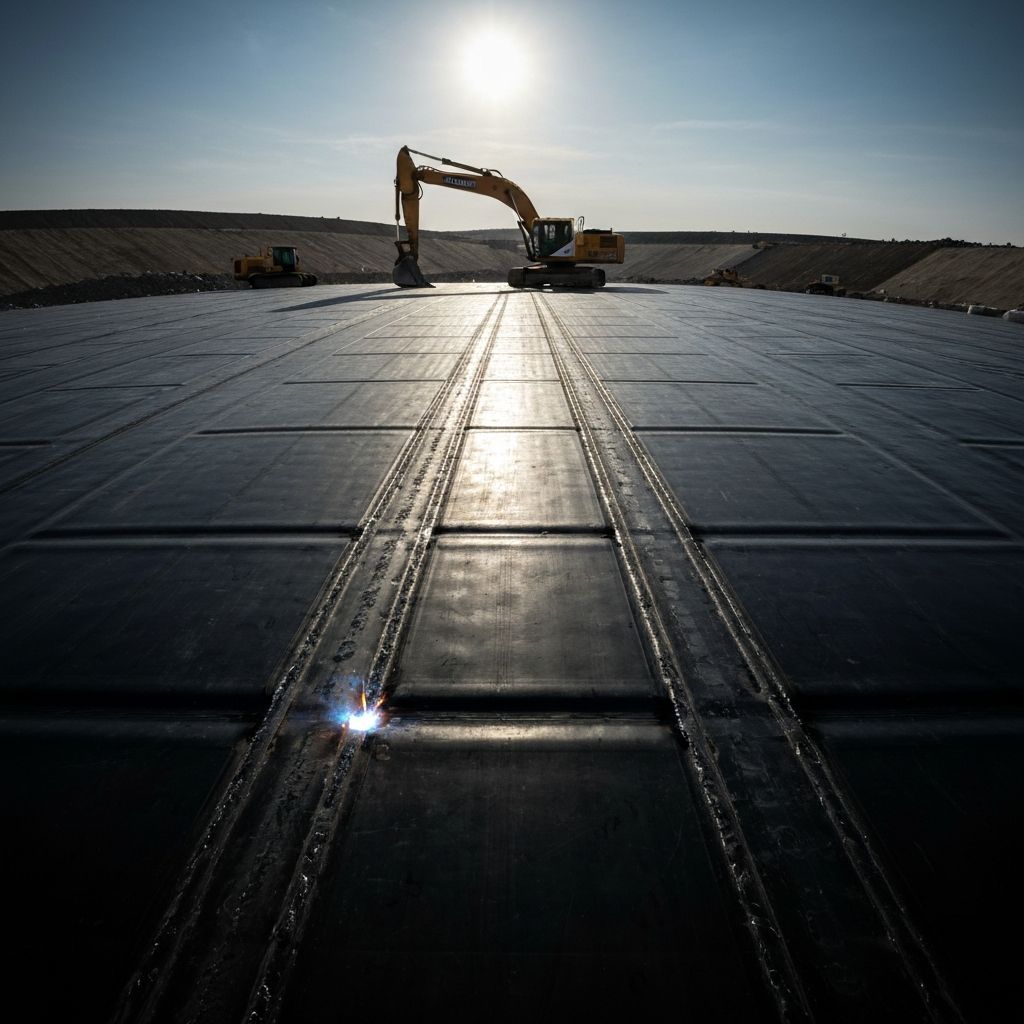
This configuration is the default choice for reservoir liners, canal and riverbank impermeable barriers, landfill base and cap systems, tailings-dam seepage curtains, and any application where the material must survive construction traffic, coarse-grained cover soil, or prolonged hydrostatic loading without developing pinhole leaks.
Specifying by Weight and Thickness
| Parameter | One Fabric, One Membrane | Two Fabrics, One Membrane |
|---|
| Base fabric mass (per face) | 100–800 g/m² | 100–600 g/m² |
| Membrane thickness | 0.1–1.5 mm | 0.2–1.5 mm |
| Total grammage range | 300–2,000 g/m² | 400–2,000 g/m² |
| Width availability | 4–6 meters | 4–6 meters |
Application-Specific Selection: Matching Structure to Site Stress
| Site Condition | Recommended Structure | Driving Factor |
|---|
| Well-prepared fine-grained subgrade, low traffic | One Fabric, One Membrane | Cost optimization with adequate protection |
| Coarse-grained subgrade, angular aggregate | Two Fabrics, One Membrane | Bidirectional puncture protection |
| Reservoir bottom, canal lining, landfill cap | Two Fabrics, One Membrane | Long-term integrity under sustained stress |
| Temporary dewatering basin, secondary containment | One Fabric, One Membrane | Functionally adequate at lower installed cost |
| Soft or variable foundation with differential settlement risk | Two Fabrics, One Membrane | Geotextile distributes tensile strain |
The Final Takeaway for This Material Class
Tensile and hydrostatic performance numbers published by reputable manufacturers cluster within engineeringly similar ranges for a given total grammage because the standards impose common minima. The factor that divides one-fabric-one-membrane from two-fabrics-one-membrane is not the absolute values on a certificate, but whether the configuration protects the impermeable core from damage when the subgrade is imperfect and the installation environment is aggressive.
If the answer is yes—and it often is on the projects that generate the most expensive repair invoices—adding a second textile face is a structural decision, not a purchasing one.